Let’s consider the possibilities and limitations of ChatGPT in the field of art.
For example, if humans are analogue-generated creatures, ChatGPT is a digitally-generated human creation. The question here is whether the creations generated by ChatGPT can surpass analog (creations born from human ability and sensibility)? That’s it. Some people think that ChatGPT will surpass analog, and that it will never be able to surpass analog (humans), the creation of God… or that it will be a problem if it is surpassed.
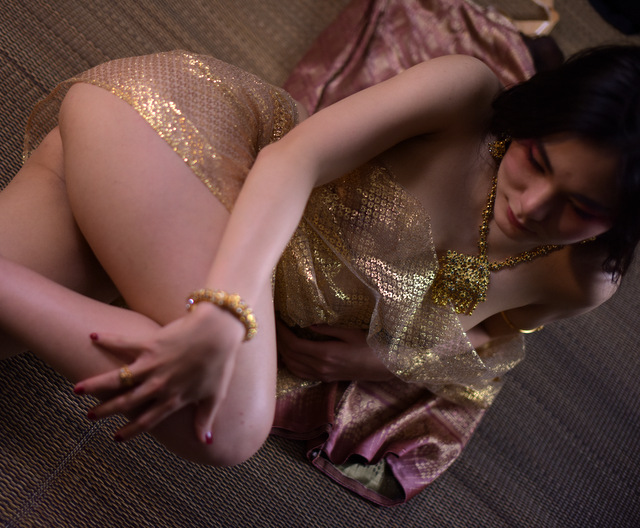
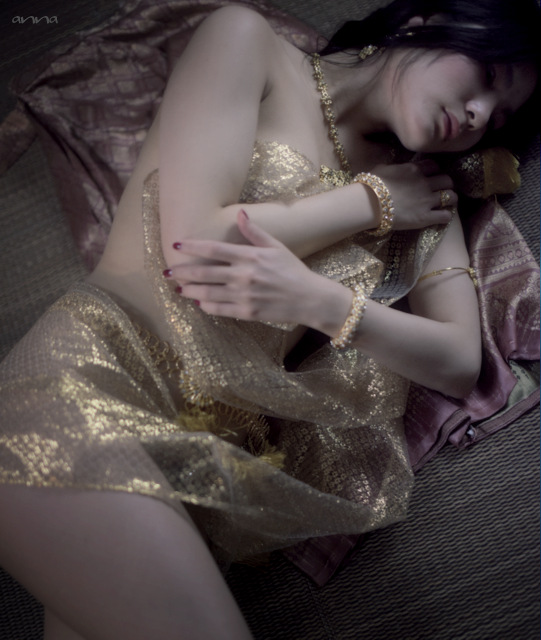
The digital images shown here are 800×640 with and specified by 16 levels of font (1,2,3,…e,f). (Pixels) = 512000 (Pixels) Pixels are granular dots, and one image is formed by a set of approximately 520,000 dots. The problem here is that the brightness is also specified in 16 levels from white to black, which is quite rough. However, if the 6 elements of red, blue, green, saturation, brightness, and hue are specified in 16 steps, to specify one point, if you count the number of cases, 6 of 16 It will be the number of powers, and it will be possible to specify about 20 million colors. If we specify it in 16 levels of gradation, it feels pretty rough, but if we think that we are choosing one point from 20 million colors, we can see that there are “tremendous choices.”
From here on, it’s just my speculation and speculation, but I believe that humans have more than 16 levels of sensible gradation, and that there are nearly infinite gradations. It may be impossible to identify more than 20 million colors for a single color, but there are colors that people choose based on their sensibility, and colors that they ignore and cannot see (not recognize). Then there is no need to distinguish 20 million colors. Digital in visual art is finite in the sense that it can be counted, while analog (film) and painting are infinite. Because Go(囲碁) and Shogi(将棋) are on a finite board, they are no match for computers. Digital-based ChatGPT, AI, etc. are within a finite number of cases, and I don’t think they will surpass analog (humans).
Even if what is rational is finite, what is irrational or irrational is ambiguous and uncertain, and we can think of it as something close to infinity. The world of visual art based on individual sensibilities is ambiguous and uncertain, and it seems to be in a realm that will forever be out of reach from digital sources.
It’s an abstract story, but Modigliani’s work is the only product of chance in this world, and no matter how hard the digital-based ChatGPT, AI, etc., try to reproduce the coincidence, I don’t think so.
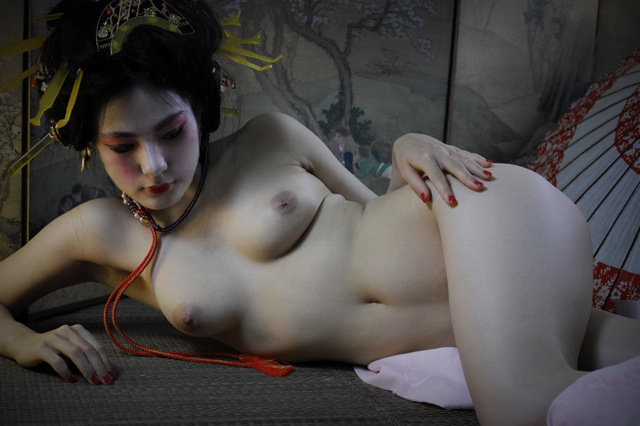
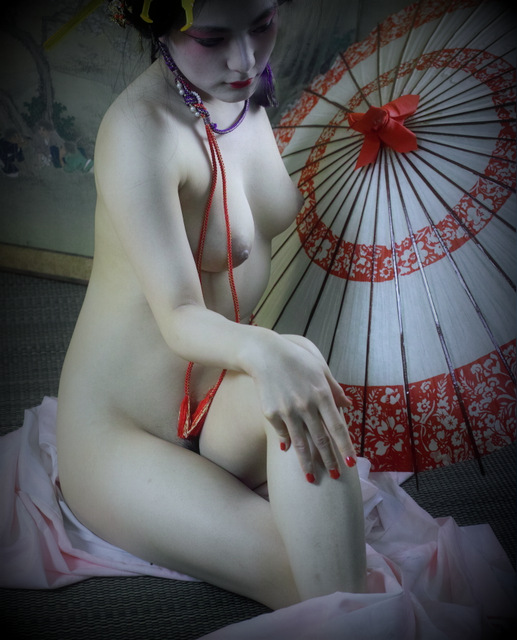
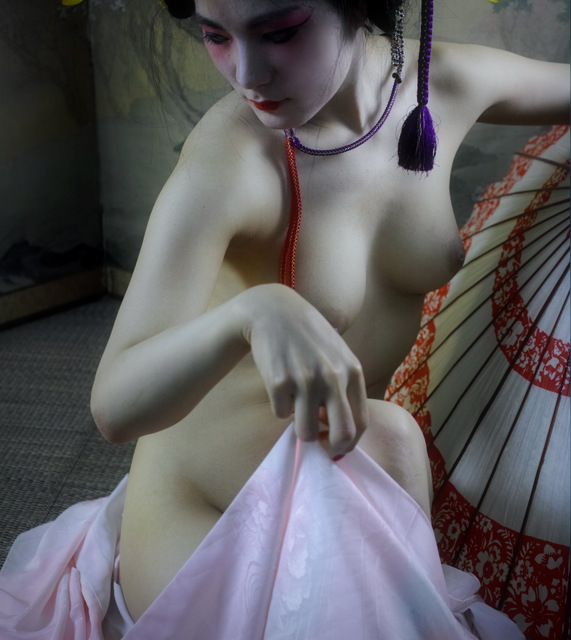
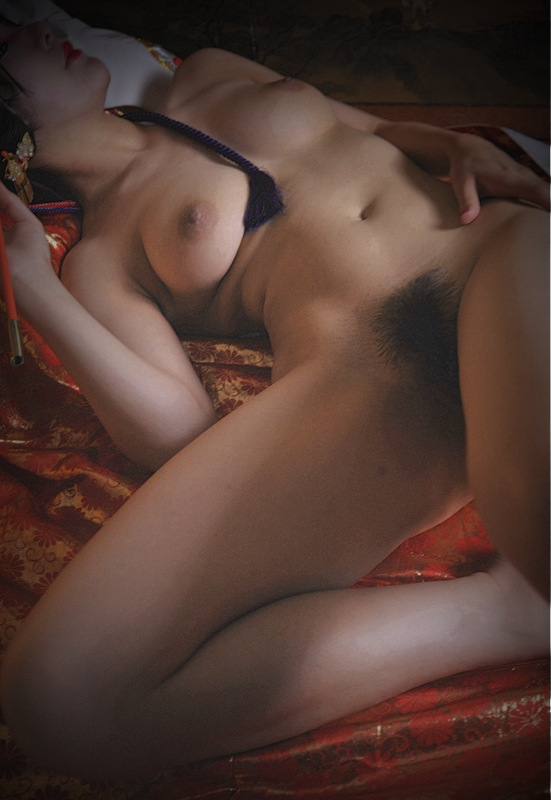
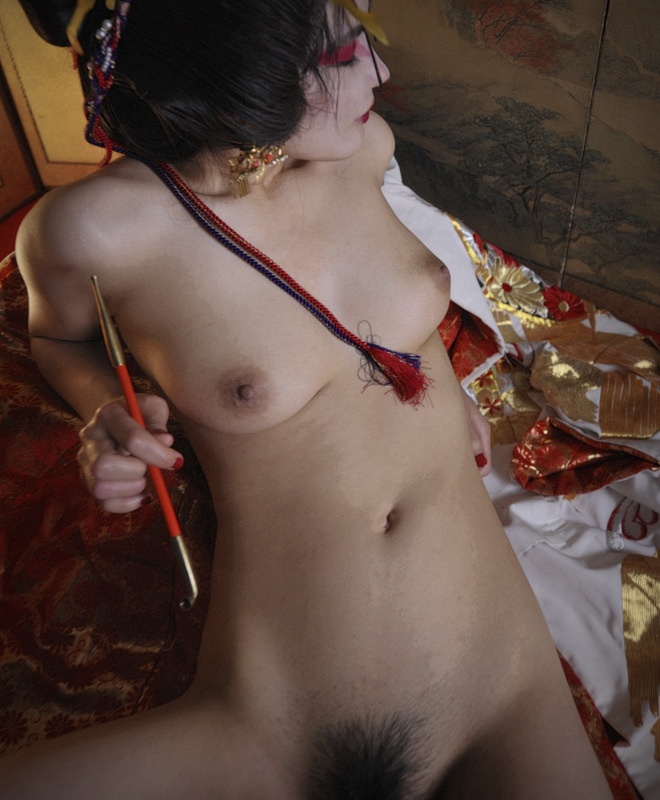
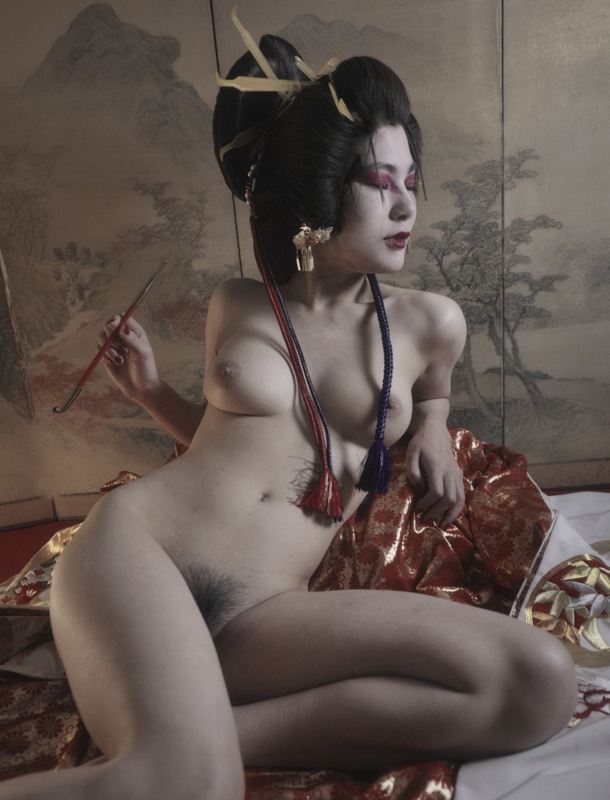
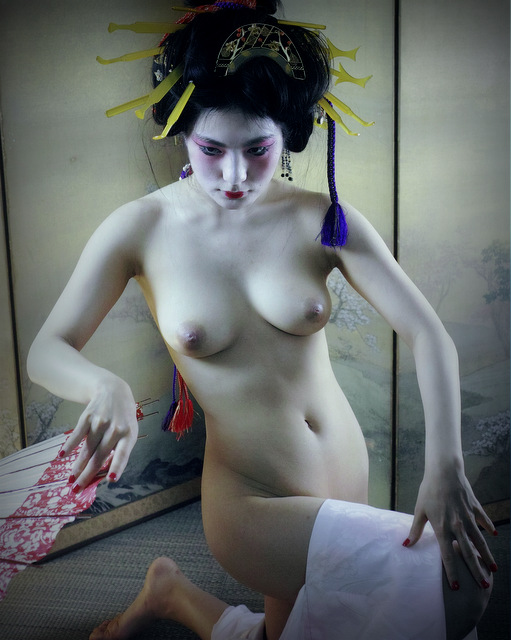
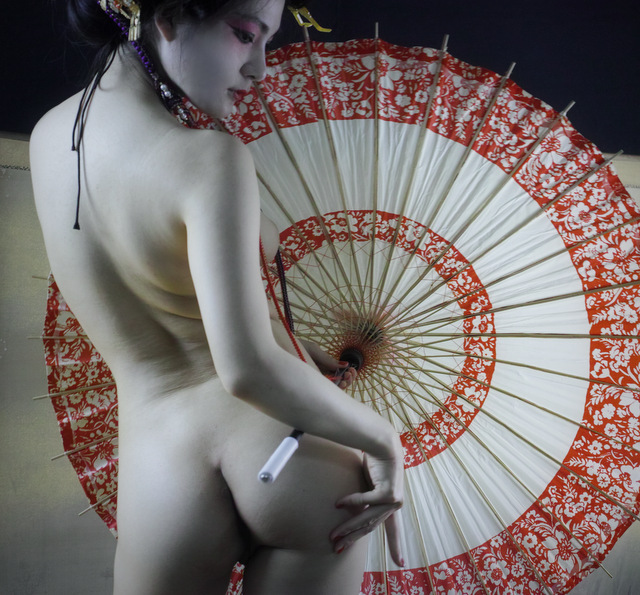
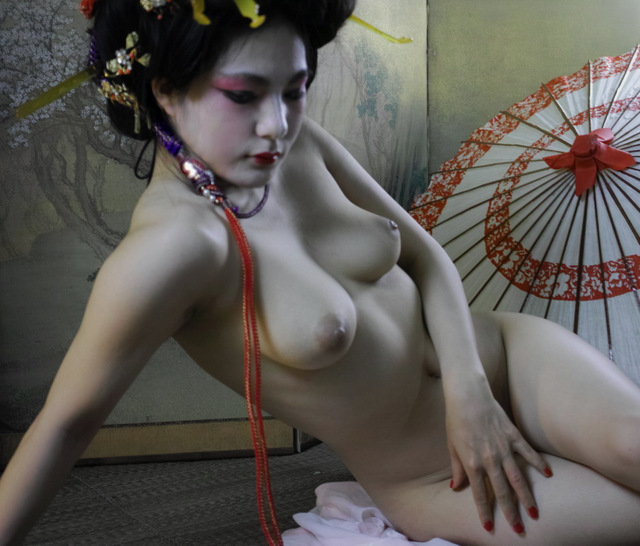
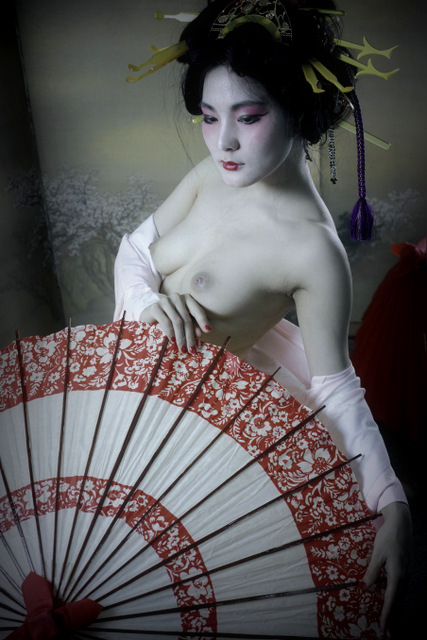
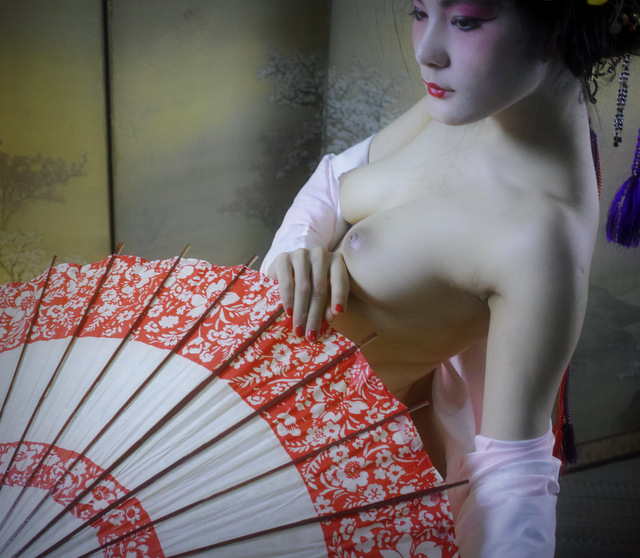
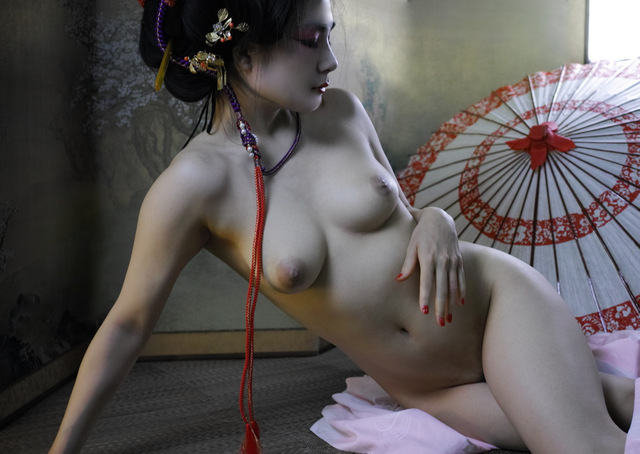
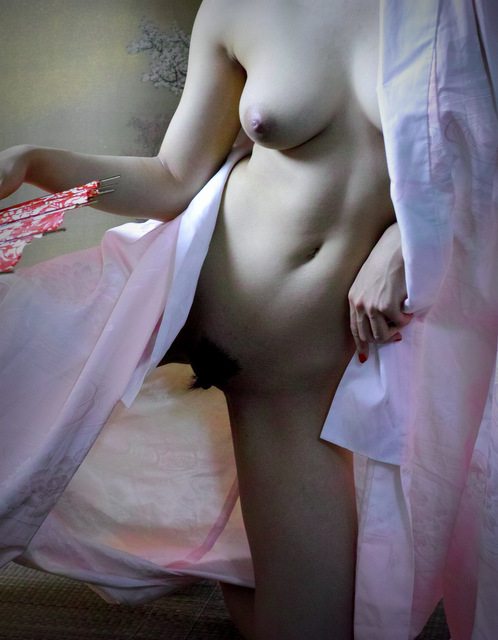
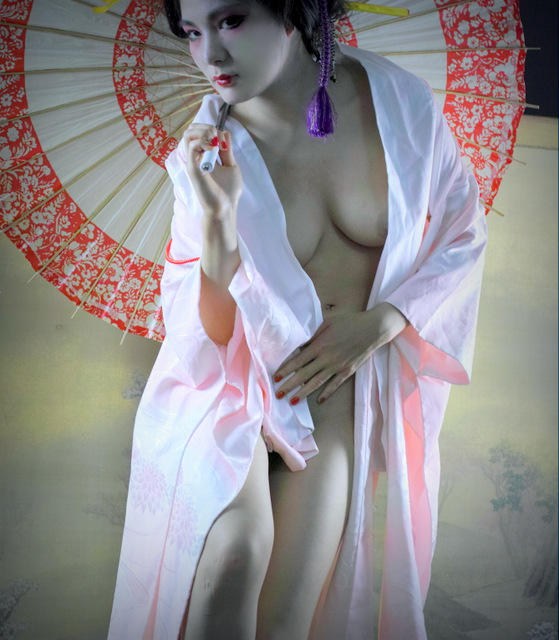
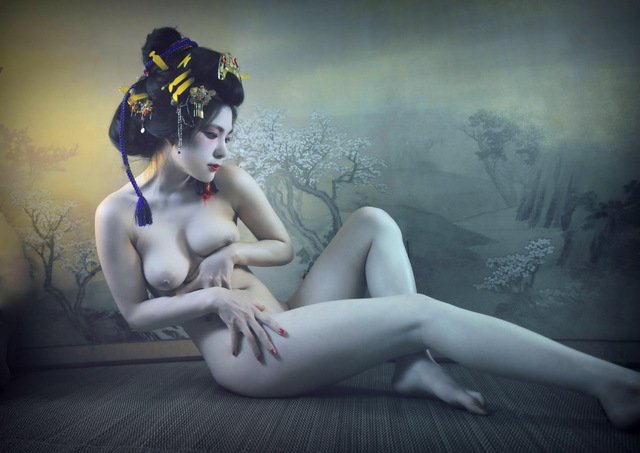
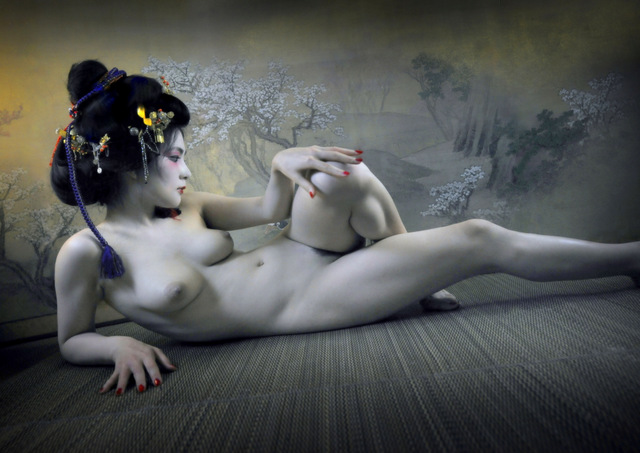
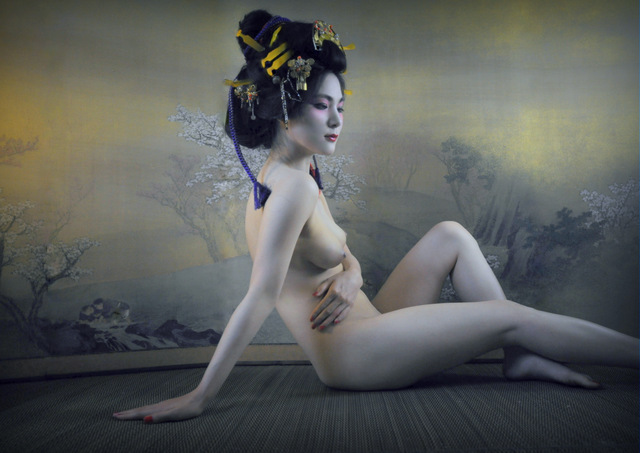
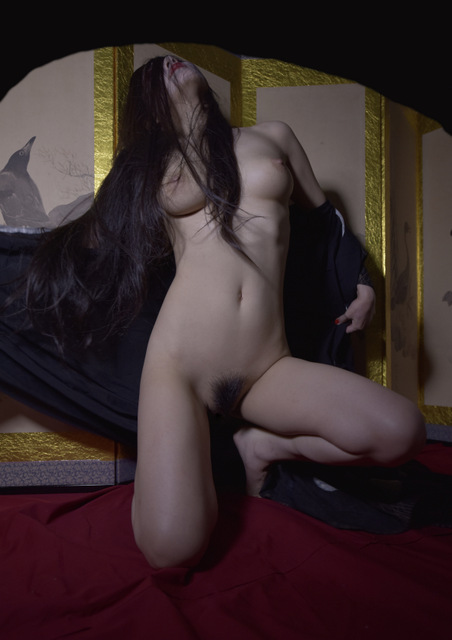
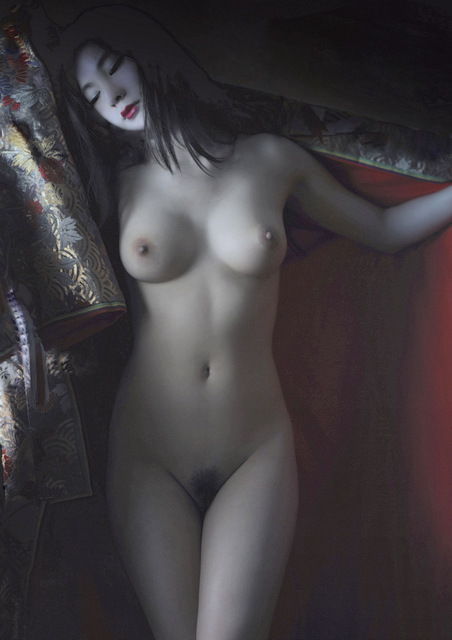
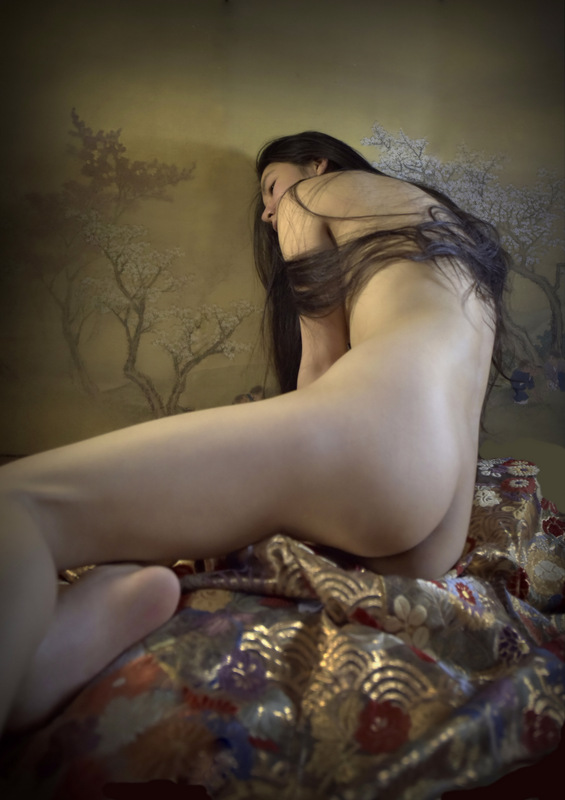
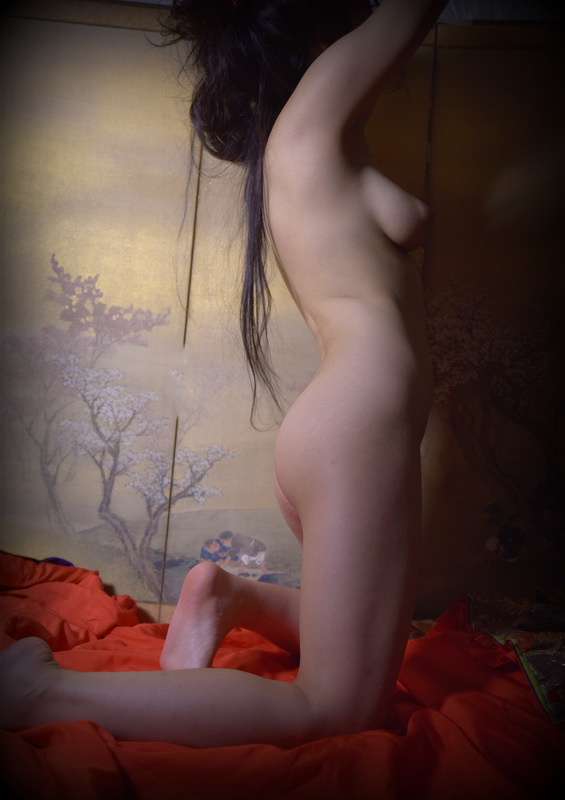
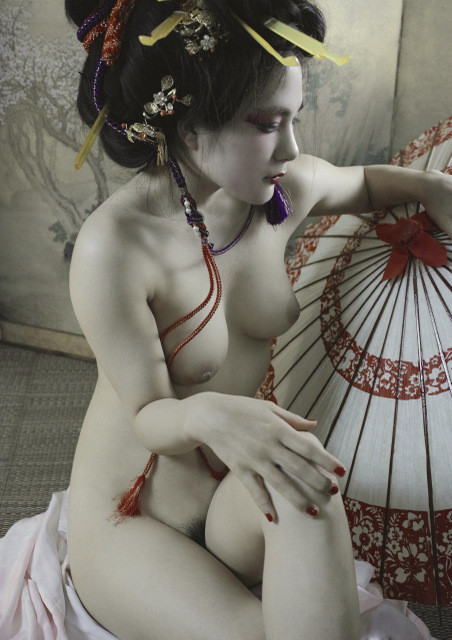
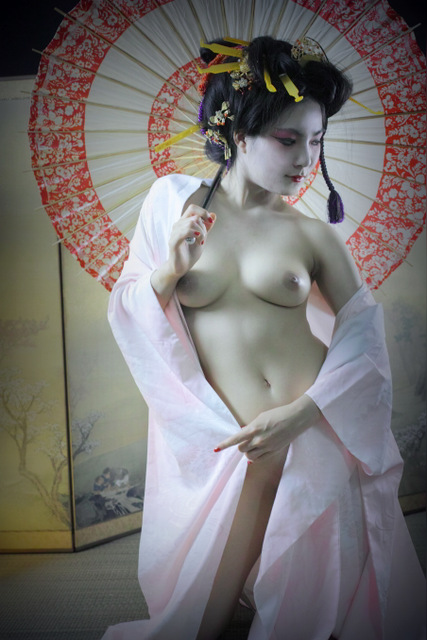
An image of a Japanese courtesan. “Of course, the model doesn’t work as a courtesan.” She became nude for the first time in my shoot, in order to become a courtesan. Through this shoot, I became a world-famous photographer, and she also became a world-famous model (in the EU). For me and her, it was a monumental encounter, and a wonderful work was born.
Nude Art & Culture in Japan: An Exploration of Eroticism
Introduction
Nude art has a profound and storied history in Japan, a country where art and culture are deeply interwoven with the social and spiritual fabric. Unlike many Western societies, where nudity often carries connotations of impropriety or scandal, Japanese culture has historically embraced the naked form as a natural and integral aspect of human existence. This perspective is evident in various forms of art, from traditional Ukiyo-e woodblock prints to contemporary photography and manga. In this essay, we will explore the nuances of nude art and its cultural significance in Japan, focusing on how eroticism is expressed and perceived in different artistic contexts.
Historical Context of Nude Art in Japan
Nude art in Japan can be traced back to ancient times, but it gained particular prominence during the Edo period (1603-1868). The Ukiyo-e movement, which translates to “pictures of the floating world,” played a pivotal role in this era. Ukiyo-e artists like Katsushika Hokusai and Kitagawa Utamaro produced woodblock prints that celebrated the beauty of the human body, often in explicitly erotic contexts. These prints, known as Shunga, depicted a wide range of sexual activities and fantasies, often with humorous or exaggerated elements.
Shunga was not merely about titillation; it also served educational purposes, offering insights into sexual practices and norms of the time. These works were accessible to a broad audience, transcending class barriers, and were enjoyed by both men and women. The candid depiction of sexual pleasure and intimacy in Shunga reflects a cultural attitude that views sexuality as a natural and essential part of life.
Nude Art and Eroticism in Modern Japan
In modern Japan, the legacy of Shunga can be seen in various forms of media and art. Manga and anime, for example, often include erotic elements, ranging from subtle innuendos to explicit content. This trend is particularly evident in genres like Hentai, which explicitly focus on eroticism. Hentai, which translates to “pervert” or “perversion,” is a genre of Japanese manga and anime characterized by overt sexual themes. It encompasses a wide range of fantasies and fetishes, highlighting the diversity of sexual expression in Japanese popular culture.
Contemporary Japanese photography also explores themes of nudity and eroticism. Photographers like Nobuyoshi Araki have gained international acclaim for their provocative works that blend eroticism with everyday life. Araki’s photography often features nude subjects in intimate settings, challenging viewers to confront their own perceptions of sexuality and beauty. His work is both celebrated and controversial, reflecting the complex relationship between eroticism and art in Japan.
The Cultural Significance of Nudity
In Japan, nudity extends beyond erotic art into everyday cultural practices. Public baths, or Onsen, are a quintessential part of Japanese life, where men and women bathe communally, often without clothing. This practice underscores a cultural comfort with nudity that contrasts with more prudish attitudes found in some Western societies. The communal aspect of Onsen fosters a sense of equality and relaxation, removing the sexual connotations often associated with nudity in other contexts.
Moreover, traditional Japanese festivals and rituals sometimes involve nudity. For instance, the Hadaka Matsuri, or “Naked Festival,” sees participants wearing minimal clothing as they engage in various activities to purify themselves and seek good fortune. These events highlight the role of nudity in spiritual and communal experiences, further illustrating its multifaceted significance in Japanese culture.
Contemporary Challenges and Controversies
Despite the historical and cultural acceptance of nudity in art, modern Japan faces challenges and controversies surrounding eroticism. The rise of digital media and the internet has led to increased scrutiny and regulation of explicit content. Laws governing obscenity in Japan are notoriously ambiguous, leading to varying interpretations and enforcement. This has resulted in a complex legal landscape where artists and creators must navigate the fine line between artistic expression and censorship.
The tension between traditional attitudes towards nudity and modern legal and societal norms is evident in recent debates over the display of explicit artwork. Exhibitions featuring erotic art, such as those by Nobuyoshi Araki, often face protests and legal challenges. These controversies reflect broader societal anxieties about sexuality, privacy, and the impact of media on public morality.
The Global Influence of Japanese Erotic Art
Japanese erotic art has had a significant impact on global perceptions of sexuality and art. The bold and unapologetic depictions of eroticism in Japanese media have influenced artists and creators worldwide. Shunga, in particular, has inspired Western artists and has been the subject of numerous international exhibitions. The frankness and creativity of Japanese erotic art challenge Western norms and invite a more open and diverse conversation about sexuality.
The global popularity of manga and anime also underscores the widespread appeal of Japanese approaches to eroticism. Hentai, despite its niche market, has a dedicated international following, and its influence can be seen in various forms of Western media. This cross-cultural exchange highlights the universal human fascination with erotic art and the potential for such art to bridge cultural divides.
Conclusion
Nude art and eroticism in Japan are deeply rooted in the country’s cultural and historical context. From the vibrant Shunga prints of the Edo period to contemporary manga and photography, Japanese artists have continually explored and celebrated the human form in its most intimate expressions. The cultural acceptance of nudity, as seen in practices like Onsen and festivals, further reflects a unique perspective on the human body and sexuality.
However, modern Japan also grapples with the complexities of censorship and the shifting boundaries of acceptable erotic expression. These challenges highlight the ongoing tension between tradition and modernity in Japanese society. Despite these challenges, Japanese erotic art continues to captivate and inspire audiences worldwide, offering a compelling lens through which to explore the interplay between art, culture, and sexuality.
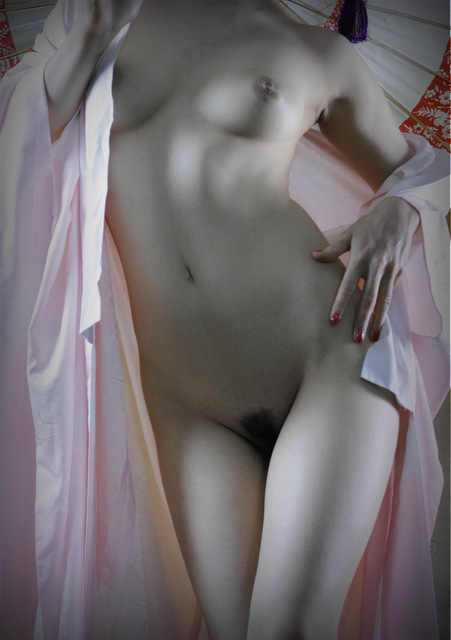
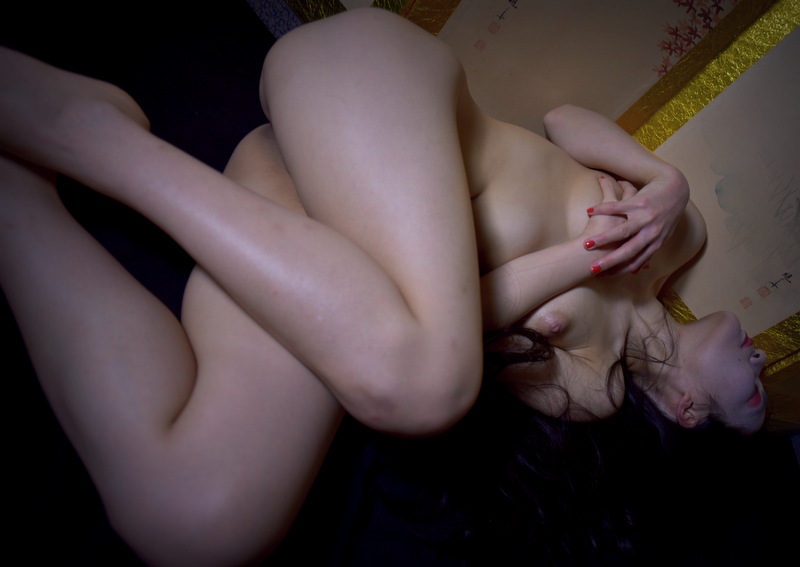
I have a lot of feelings about this work. “The editing is quite unreasonable.” It’s edited like a painting with its contours, but the image quality is rough, so how is it as a photograph? I have a question, but I think it would be nice if you could think of it as a painting. When I exhibited in Beijing in the fall of 2017, I was bombarded with questions from people who seemed to be young students. I can’t forget the look in their eyes, whether it matched their sensibilities or whether it broke the conventional concept of photography.
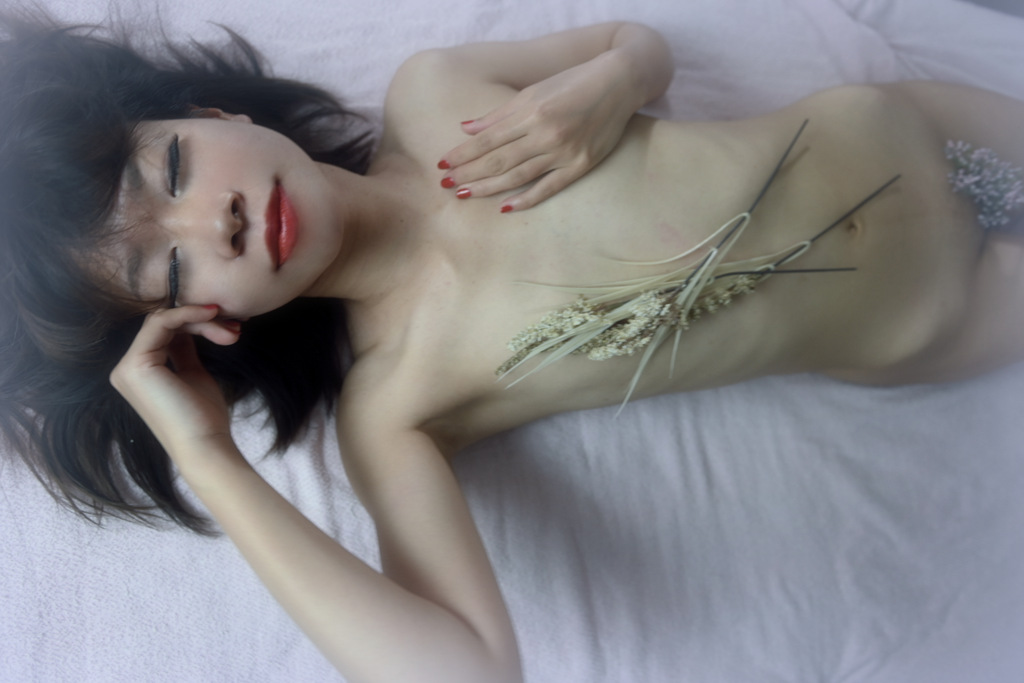
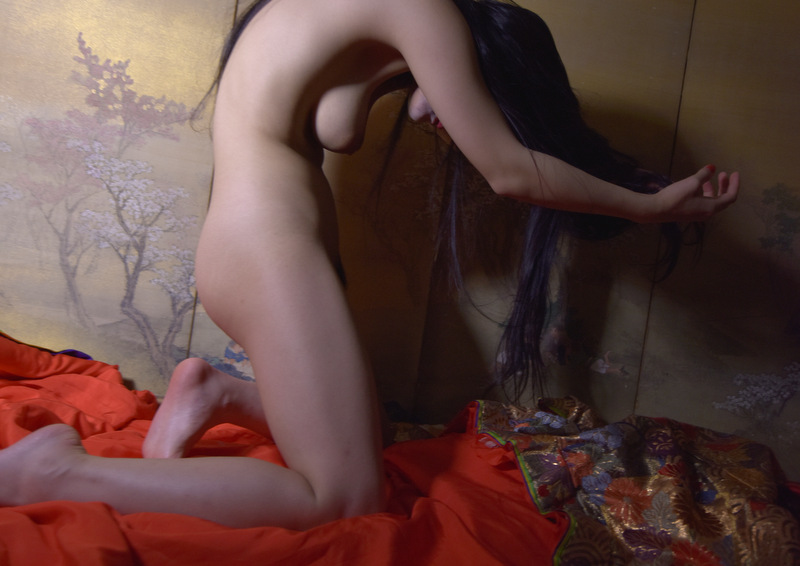
In my photography, I leave all the “staging” to the model. “I’m not a director, and I have no theater experience.” If possible, I would like the model to become a “role” like in this shoot. The model in this shoot seems to be trying to challenge the taboo.
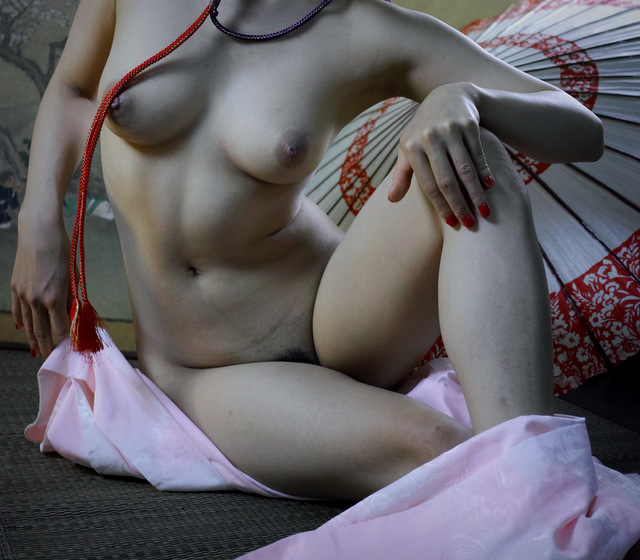
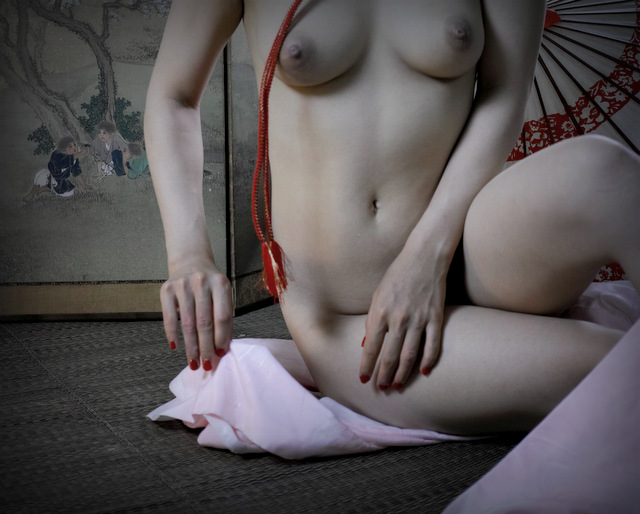
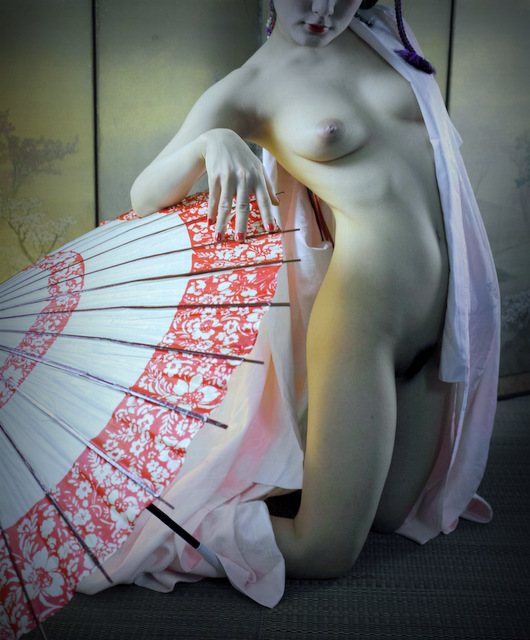
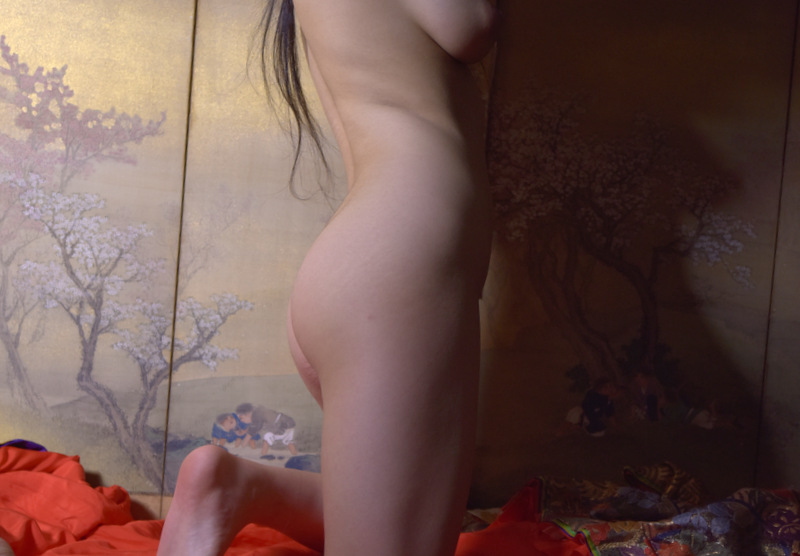
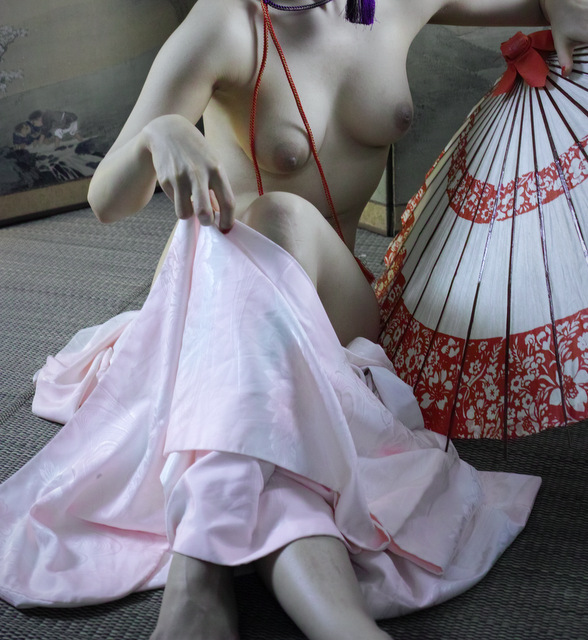
The background is a folding screen, and the kimono worn by courtesans is used. I (photographer) do not give the model any pose instructions, but rather follow the “appearance” of the model’s inner sensibility with my camera.
“Byobu” means a screen in the West, where Japanese paper is pasted on a wooden frame and Japanese paintings are drawn on it. “It’s used as a room divider.”
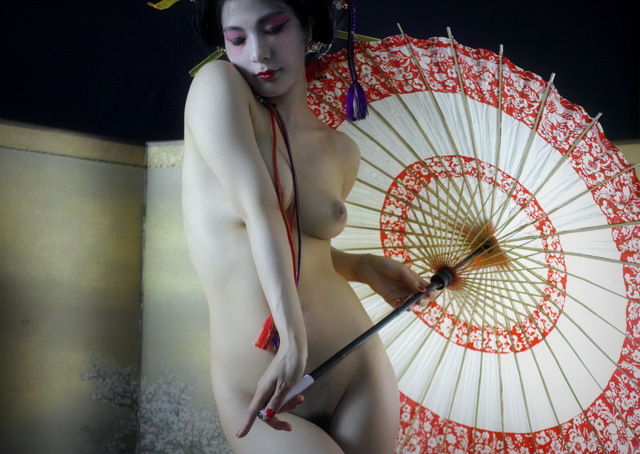
Nude art & culture in Japanerotic Red “Kasa” is umbrella
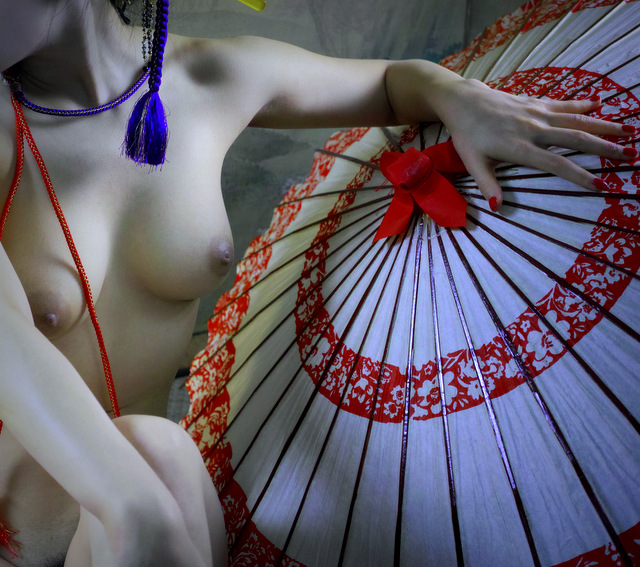
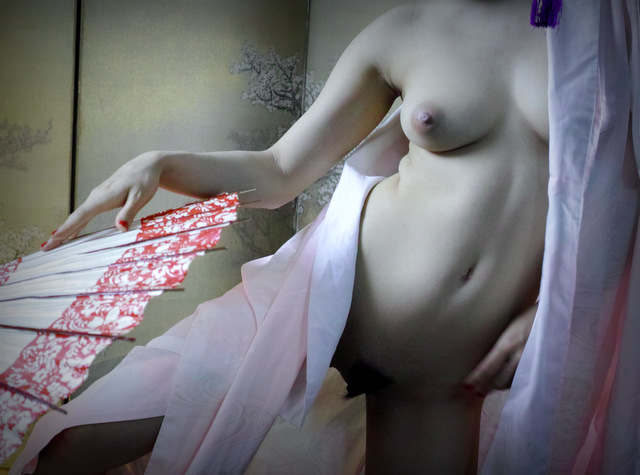
“Kasa” is umbrella in Japanese “Kasa” is the Japanese word for umbrella, and it is made of washi paper with a bamboo framework and an oily surface. Compared to Westerners, Japanese people like to use umbrellas, and they have become an indispensable part of Japanese traditional culture.
In general, Japanese culture is said to be a “static” culture, but this page expresses a “dynamic” Japanese culture. Also, the camera position is taken from below.
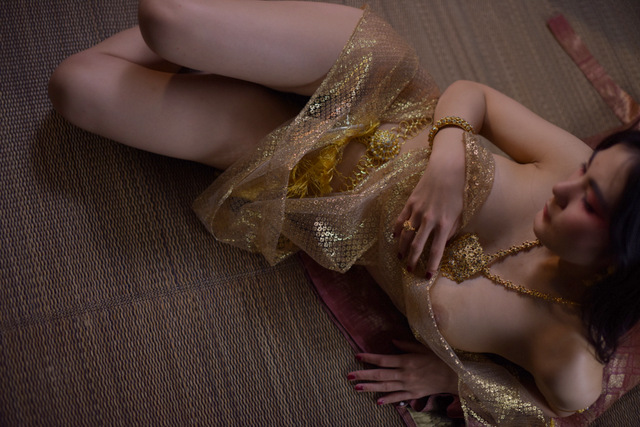
These images seem to show my tastes most conspicuously. From birth to today, and from now on, it may be that I am making a “picture” of my eternal desire.