
鏡の中に
もう一人の彼女がいる
肌は触れるためではなく
光を受け止める面になり
呼吸は消され
輪郭だけが残る
そこにあるのは
鼓動する肉体ではなく
意味を剥がされた形
置かれたオブジェ
視線は感情を忘れ
滑るように線をなぞり
欲望さえ
展示室の外に置いてきたかのよう
彼女自身もまた
それを見つめながら
自分から遠ざかっていく
鏡は
真実を映すのではなく
人を
ものに変える
鏡の中に
もう一人の彼女がいる
肌は触れるためではなく
光を受け止める面になり
呼吸は消され
輪郭だけが残る
そこにあるのは
鼓動する肉体ではなく
意味を剥がされた形
置かれたオブジェ
視線は感情を忘れ
滑るように線をなぞり
欲望さえ
展示室の外に置いてきたかのよう
彼女自身もまた
それを見つめながら
自分から遠ざかっていく
鏡は
真実を映すのではなく
人を
ものに変える



まだ実感がわかない・・
小学1年生のときに同じクラスで
高校は違ってましたけど、大学まで一緒で。
:
ここ数か月、電話が鳴るたびにびくびくして
そして、ついに一人娘さんから連絡が入りました。
「亡くなりました・・」と。
その間、二度ほど見舞いにも行きましたが
たぶん、僕には遠慮しなかったのでしょう・・
見舞いに来た私に気遣うこともなく
声をかけても返事もすることもなく
ただ、不機嫌そうにベットに横たわってました。
:
彼はエリート意識が人一倍強く
負けん気だけで一生を徹してしまいました。
私とは真逆な性格をしてまして
価値観も全く違い、見えてる世界も違い
なぜ、70年間も友人でいられたのか、不思議でなりません。
ただ、信頼関係だけの繋がりだったのでしょう・・
そう、確信してます。
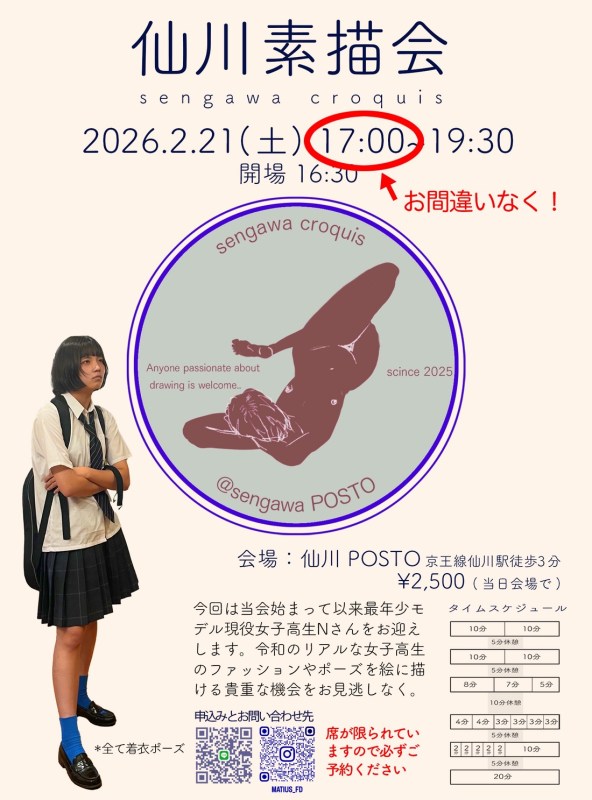
仙川素描会 2月21日(土曜日) 17:00~19:00
令和のリアルな女子高生のファッション・ポーズを描く!
場所:

左右対称の像は美しい。
なぜなら、そこには選択がない。
揺れないこと。
迷わないこと。
疑問を持たないこと。
完成された形とは、
時間を拒絶した姿なのだ。
呪縛とは暴力ではない。
むしろ、優しさに似ている。
揃っているね、
同じだね、
問題ないね。
その言葉は慰めであり、
同時に、ずれを許さない封印でもある。
In recent years, the South Pacific region has emerged as a frontline of intensifying geopolitical tensions. Under China’s Belt and Road Initiative (BRI), massive investments have flowed into the region, with infrastructure development and economic assistance appealing to many Pacific island nations. At the same time, however, concerns have grown that these moves constitute “economic aggression.” Between 2008 and 2022, China poured enormous development funds into Pacific Island countries, leading to a series of cases in which diplomatic recognition was shifted.
From 2019 to 2024, Kiribati, the Solomon Islands, and Nauru severed diplomatic ties with Taiwan and realigned toward China. In response, the United States and Australia have accelerated alliance-building efforts, expanding both military and economic assistance. At the 2025 Pacific Islands Forum (PIF), China’s growing influence, climate change, and security became the central agenda items. With Taiwan-aligned Palau set to host the forum next year, tensions in the region have reached a peak.
Among the cases drawing particular attention is that of the Republic of Palau. With a population of approximately 18,000, Palau is one of Taiwan’s few remaining diplomatic allies and has consequently become a prime target of Chinese pressure.
On September 15, 2025, at the International Military Law and Operations Conference hosted by U.S. Indo-Pacific Command (INDOPACOM), Palauan President Surangel Whipps Jr. delivered a striking statement. “We are already in a state of war,” he declared. “China is deliberately working to weaken our leadership, disrupt essential services, and undermine trust in our government.” He cited economic coercion, cyberattacks, and drug trafficking as concrete examples, strongly calling for deeper partnerships with the United States and its allies. Issued just ahead of the PIF, his remarks heightened alertness across the entire region.
China’s economic pressure on Palau has focused on exploiting the country’s vulnerability stemming from its dependence on tourism. Tourism revenue accounts for roughly 40 percent of Palau’s GDP, and the sharp decline in Chinese visitors has dealt a severe blow. According to President Whipps, annual Chinese tourist arrivals exceeded 100,000 in the early 2010s but plummeted after Palau maintained diplomatic relations with Taiwan. One Chinese ambassador reportedly made a coercive proposal, stating that China would send “one million tourists” if Palau severed ties with Taiwan. Palau refused, and as a result has faced economic isolation.
The situation has been further aggravated by land acquisitions by Chinese-linked investors. In multiple cases, land near U.S. military facilities has been acquired under 99-year leases, only to be left undeveloped and vacant. This has fueled distrust among local residents and exacerbated social divisions. Although China officially denies involvement, such “gray-zone” operations are a textbook method of converting economic influence into leverage for diplomatic realignment.
Cyberattacks have also escalated. In March 2024, an incident reportedly occurred in which China-linked hackers breached Palau’s government systems and stole sensitive data. Government websites experienced repeated outages and data leaks, pushing administrative functions to the brink of paralysis. President Whipps has characterized these incidents as part of China’s “hybrid threats” and has also pointed to a rise in drug trafficking. Illegal drugs, including Chinese-produced fentanyl, have washed up on Palau’s shores, fueling addiction among young people. The president argues that these are not merely criminal acts but components of a state-led strategy to weaken the country. Indeed, Chinese criminal syndicates have become increasingly active across the Pacific region, operating in the shadows of economic penetration, leaving Palau with little choice but to feel that it is “already at war.”
The United States has responded swiftly. According to a July 2025 report by The Washington Post, the U.S. military plans to upgrade Palau’s main port, Malakal Harbor, in 2026. The project includes the construction of submarine docks and logistics facilities, effectively transforming a port primarily used by tourist vessels into a military hub. This initiative is based on the extension of the Compact of Free Association (COFA) between the United States and Palau and will expand rotational U.S. force deployments. The goal is to strengthen Palau’s role as a strategic linchpin in the Indo-Pacific region.
Meanwhile, Australia has concluded a defense agreement with Papua New Guinea (PNG), reinforcing regional alliances. However, Vanuatu has maintained its pro-China stance, highlighting the region’s complex power dynamics. Responding to President Whipps’ appeal, INDOPACOM Commander Admiral Samuel Paparo emphasized that “deterrence grows exponentially through alliances—two countries create four times the deterrence, three countries nine times.” He argued that peace is achieved through “deterrence by presence.”
Palau’s situation is a microcosm of the South Pacific. While China’s economic assistance helps address infrastructure gaps, it also carries significant risks, including debt traps and diplomatic dependency. Analyses by the Lowy Institute suggest that Chinese investment may serve as a precursor to military basing, raising concerns about the region becoming a proxy theater in U.S.–China rivalry. Palau continues to resist pressure in order to preserve its ties with Taiwan, but the economic costs are severe. The international community must move beyond simple aid and build sustainable partnerships. As Palau prepares to host the 2026 PIF, regional stability hinges on a “competitive peace” between the United States and China. Palau’s voice is a warning that cannot be ignored.
Daiju Wada is a researcher specializing in diplomacy and security. He is the CEO of Strategic Intelligence Co., Ltd., a board member of the Japan Counterintelligence Association, and a lecturer at Seiwa University. His research fields include international politics, security studies, international terrorism, and economic security. While working as an academic, he is also a practitioner, providing geopolitical and economic security risk consulting (including intelligence briefings, advisory services, and seminars) for companies expanding overseas.
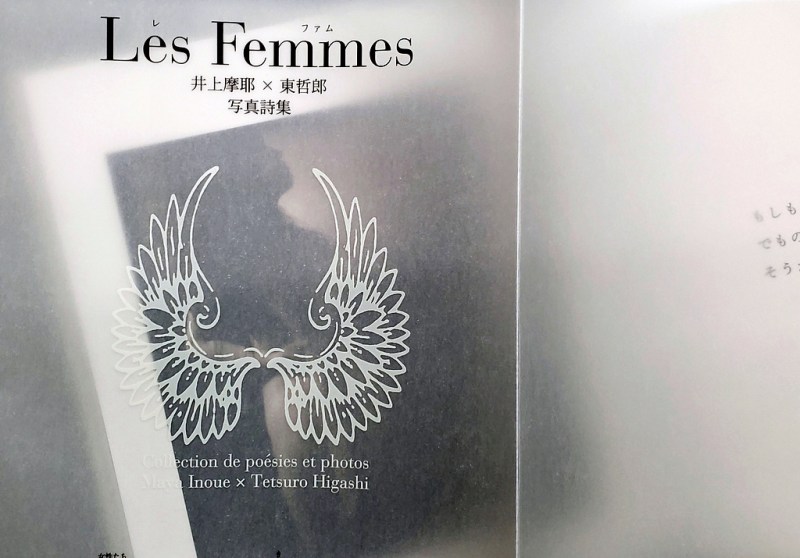


 被写体を希望する方々へ