⭐ Artistic Nude Posing for Women (Figure Drawing Context)
1. Standing Nude Poses
These are common for studying balance and weight distribution.
- Contrapposto: weight on one leg, natural S-curve through the body
- Arms raised or behind the back: helpful for studying ribcage and torso extension
- Relaxed stance: both arms down, subtle tilt of hips and shoulders
2. Seated Nude Poses
Useful for understanding compression of the torso and limbs.
- Cross-legged or one leg up: shows how muscles compress naturally
- Seated on the floor, leaning back on hands: good for studying the abdomen and chest angle
- Seated with knees drawn up: creates interesting shapes and shadows
3. Lying Nude Poses
Great for studying foreshortening and curvature.
- Supine (on back): arms at sides or above head; shows torso length and perspective
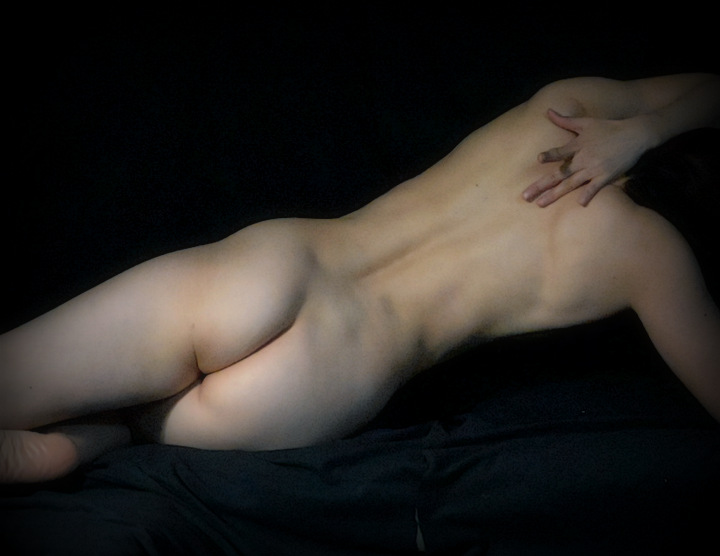
- Side-lying: natural curves, gentle twist in spine and hips
- Reclining with support: torso angled upward on an elbow or cushion, classical art style
4. Dynamic or Twisted Poses
For more advanced anatomy practice.
- Torso slight twist while seated: emphasizes ribcage rotation
- Reaching motions: arms extended to study stretched vs. relaxed muscles
- Walking or stepping pose: captures natural movement
⭐ Tips for Drawing Nude Forms (Safe & Artistic)
Focus on structure, not erotic detail
Use:
- gesture lines
- shapes and proportions
- light and shadow
Avoid explicit or sexual elements.
Study classical references
Artists like:
- Michelangelo
- Degas
- Bouguereau
- Käthe Kollwitz
used nude forms for anatomy, composition, and emotional expression.
Use simplified forms
Think:
- spheres for shoulders
- cylinders for arms and legs
- box forms for torso and pelvis
Mind foreshortening
Lying poses often require attention to perspective.

 被写体を希望する方々へ