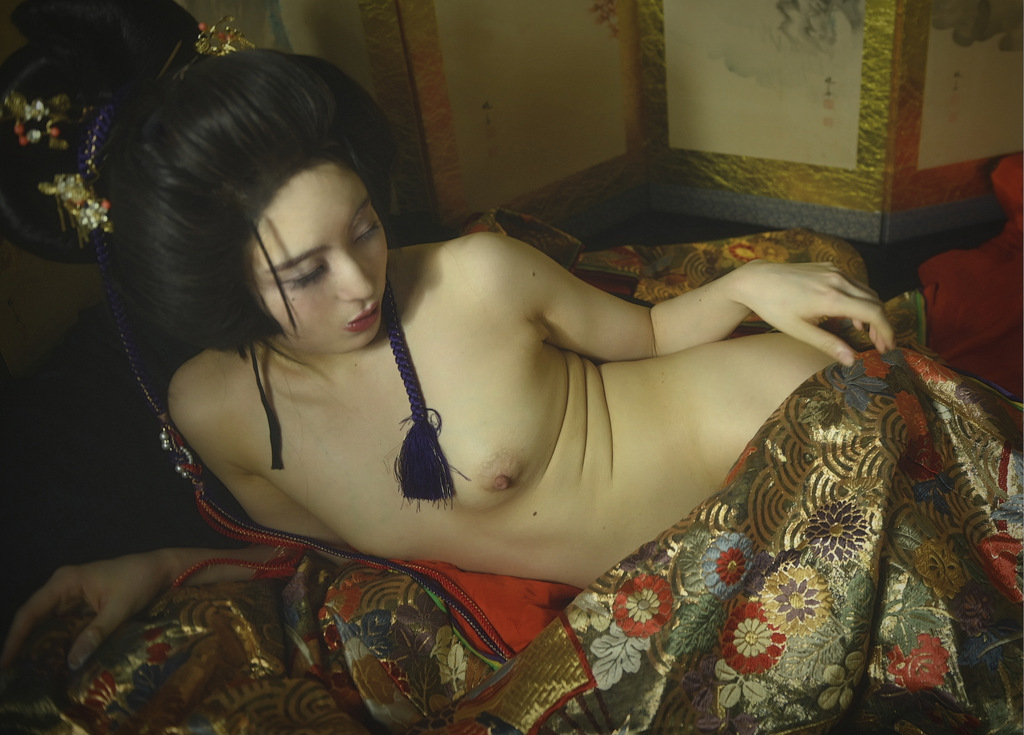
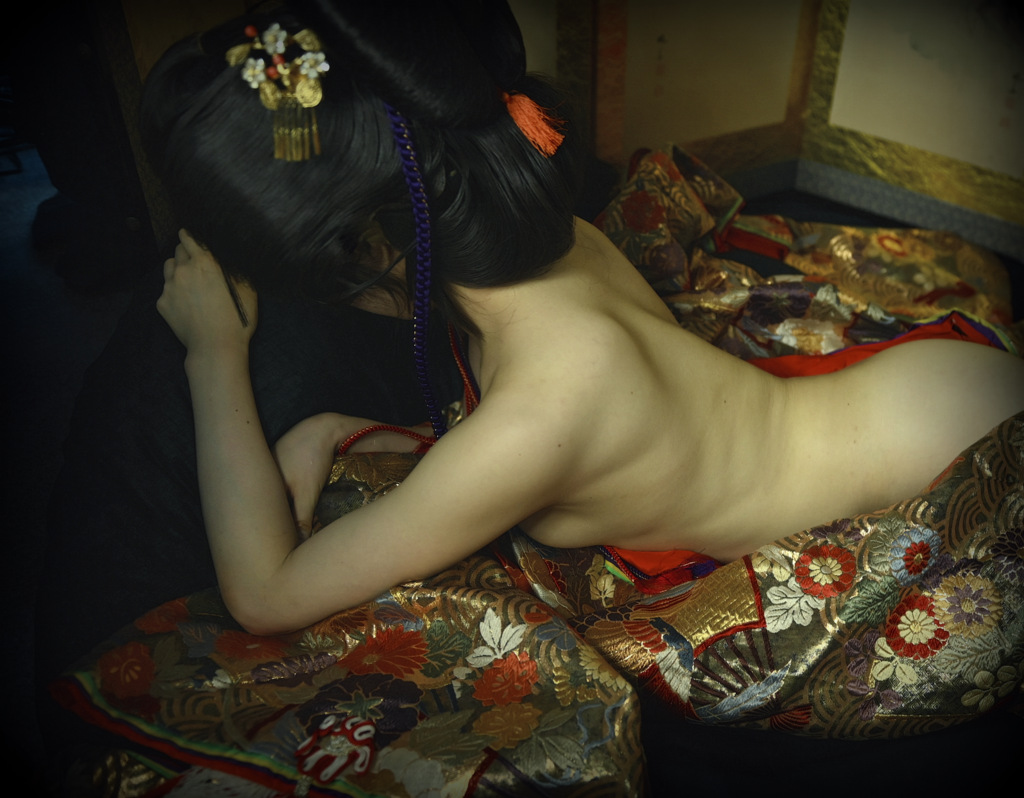
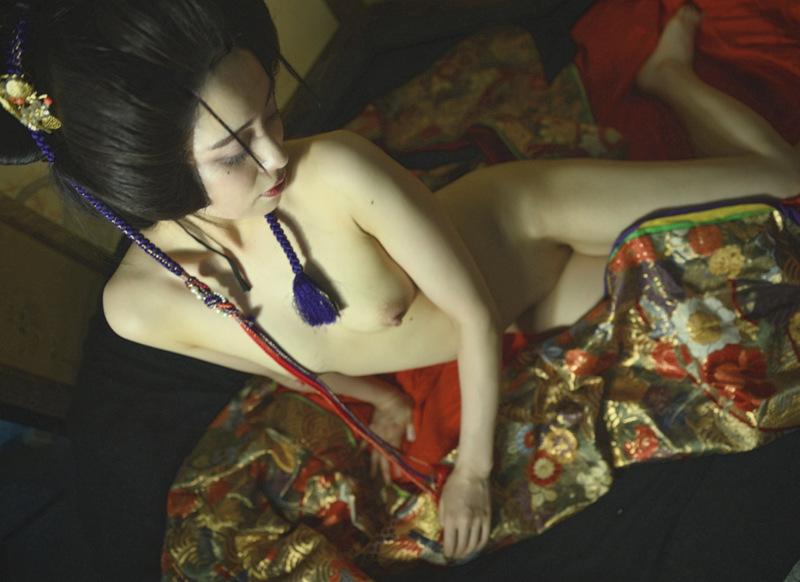
The appearance of oiran was markedly different from that of both geisha and the average woman, reflecting the upper class tastes and expectations of their customers; by the height of their profession at the beginning of the Edo period, oiran wore upwards of eight large kanzashi (hair ornaments), typically made from tortoiseshell, silver, gold and gemstones, in their large, elaborate and heavily waxed hairstyles; these hairstyles, all with different names and meanings, were worn to represent different ranks, seasons and occasions.
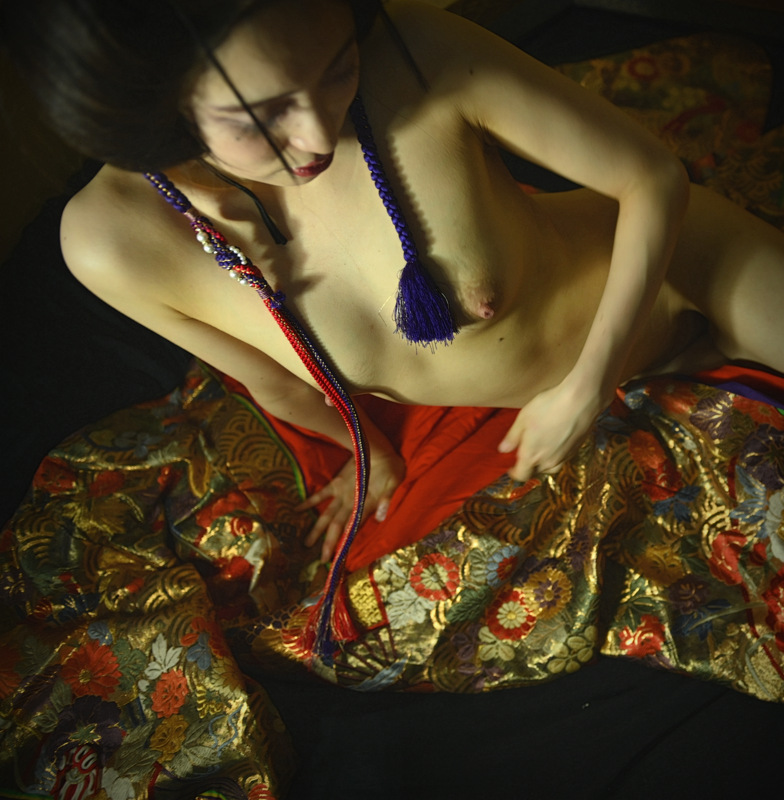
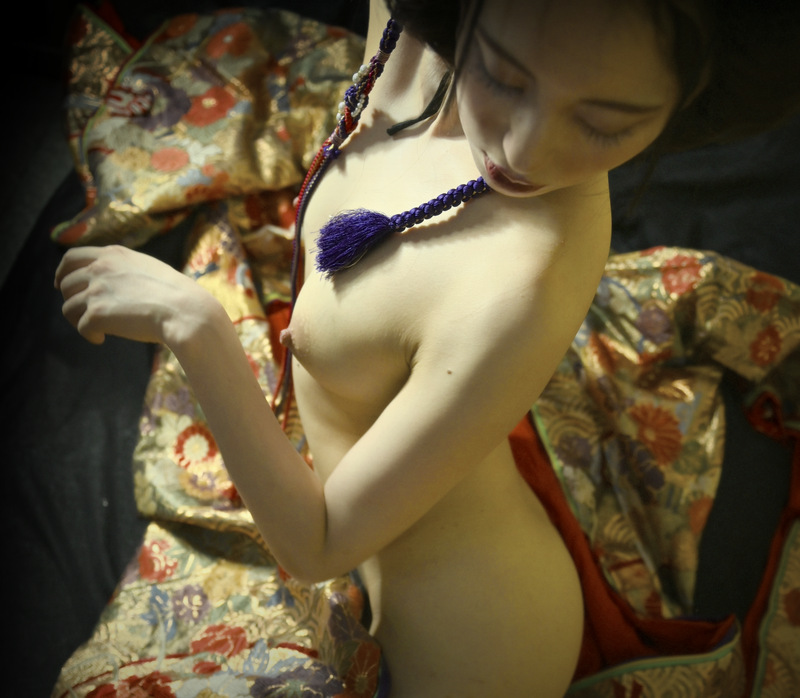
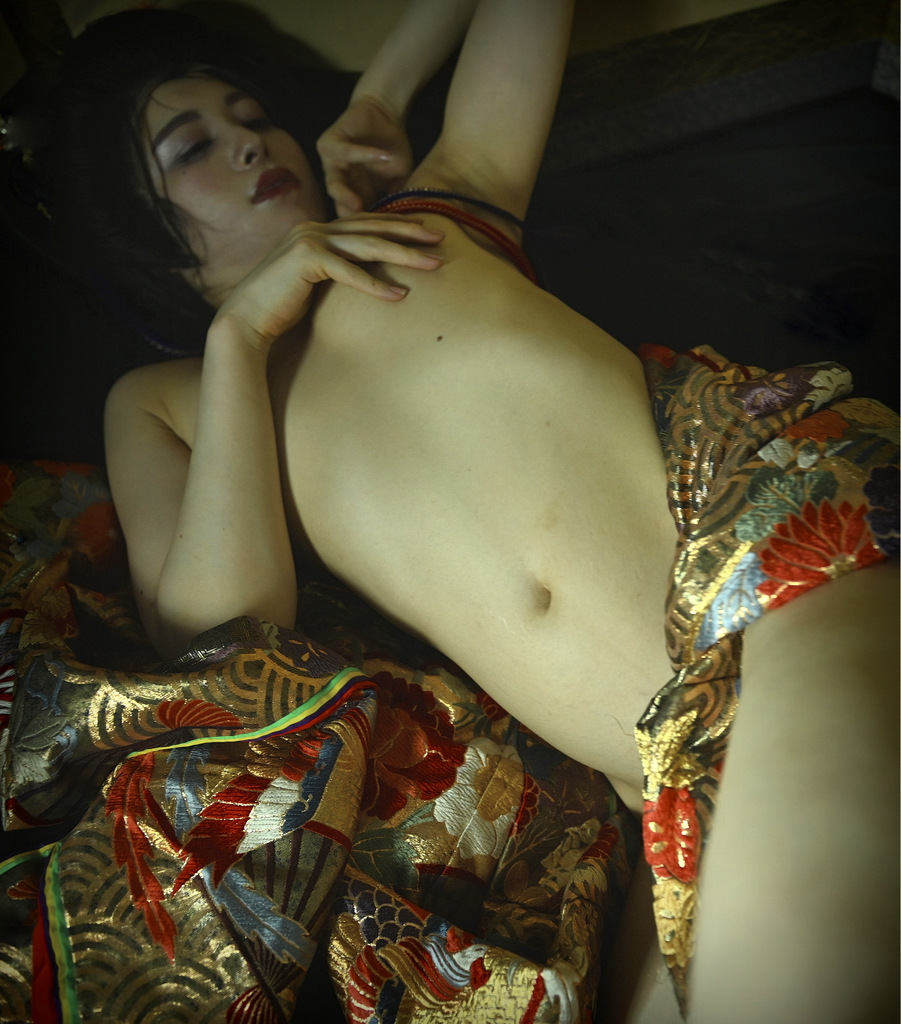
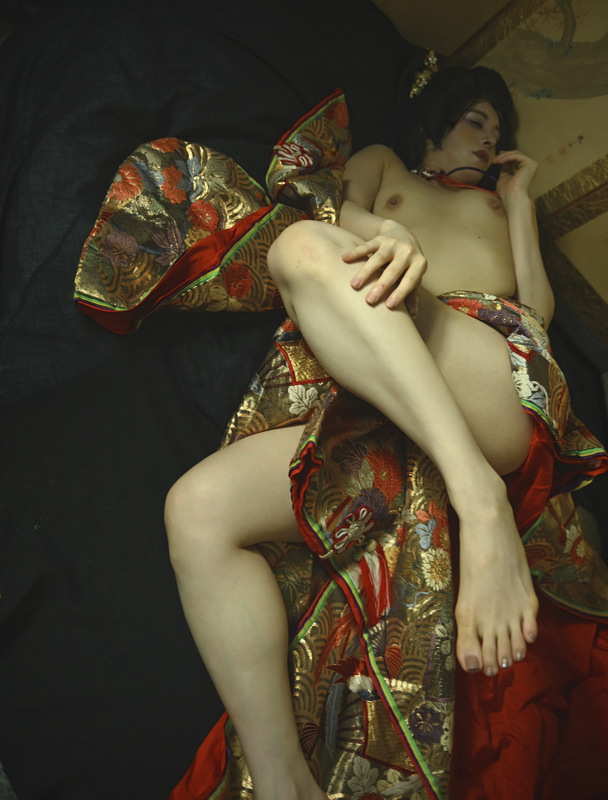
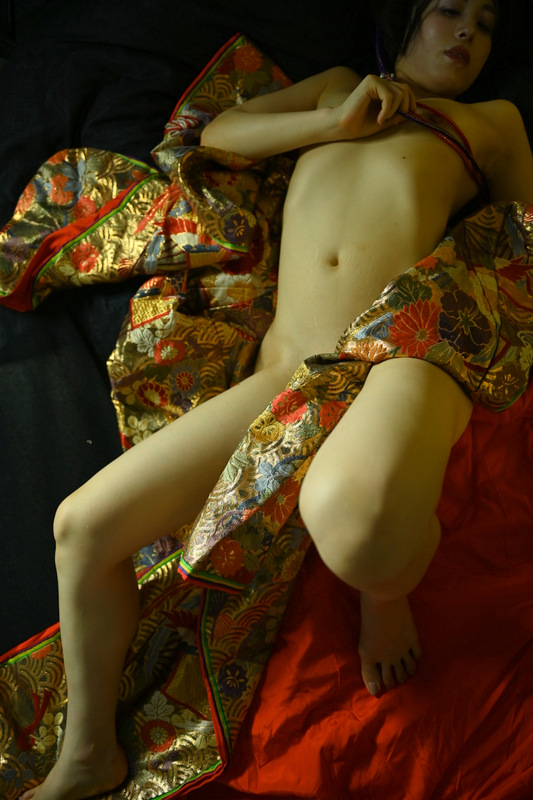
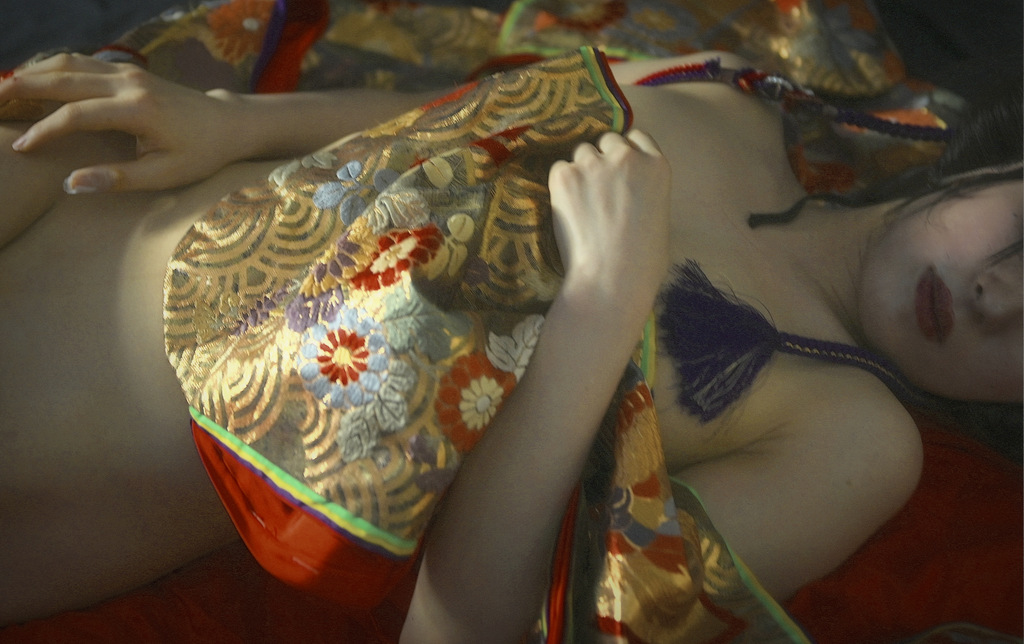
An oiran‘s outfit consisted of a number of layered kimono; the outermost kimono would usually be a heavily decorated, satin silk or silk brocade garment known as the uchikake, which would feature a heavily padded hem. This would be worn unbelted over the top of the underkimono, which featured a patterned design only along the hem, and was belted with an obi tied at the front. During the Edo period, this obi became both wider and stiffer, adding weight and discomfort.
When parading or otherwise walking outfit, oiran wore koma geta – 20 cm (7.9 in)-tall pauwlonia wood clogs with three “teeth”. Though lightweight for their size, these would prevent an oiran from taking anything other than small, slow footsteps when walking; oiran would thus walk in koma geta with a sliding, figure of 8 (“suri-ashi”) step, with two manservants (known as “wakaimono”) assisting her. Oiran generally did not wear tabi socks, with her bare foot considered to be a point of eroticism in her outfit. In total, a formal parade outfit worn by an oiran could weigh in excess of 20 kg (44 lb), often weighing as much as 30 kg (66 lb),[a] and would require great assistance to put on. …. description based on Wikipedia
Compared to yūjo, whose primary attraction was the sexual services they offered, oiran were first and foremost entertainers. In order to become an oiran, a woman first had to be educated in a range of skills from a relatively young age, including sadō (Japanese tea ceremony), ikebana (flower arranging) and calligraphy. Oiran also learned to play the koto, shakuhachi, tsuzumi (hand drum), shamisen and kokyū. Clients expected oiran to be well read, able to converse and write with wit and elegance, and able to match them in intellect in conversation.
Within the pleasure quarters, an oiran‘s prestige was based on her beauty, character, education and artistic ability, which was reflected in the number of ranks falling in the category of “oiran”. An oiran, unlike geisha or common prostitutes, could be promoted or demoted by the owner of her brothel, and commonly inherited a generational name (“myōseki” (名跡)) upon gaining promotion to a higher rank; these names, exclusively the property of the brothel owner, typically carried the prestige of the person who held it previously, and brothel owners commonly chose only those of similar countenance and reputation to inherit them. Myōseki were written in kanji, and were typically more elaborate than the average woman’s name of the time, holding meanings taken from poetry, literary history and nature; myōseki were rarely passed from one oiran directly down to their apprentice.
Oiran not considered to be high ranking or skilled enough to hold an inherited name would instead use a professional name considered elegant enough to be the name of a courtesan; these were typically pseudonyms taken to either protect one’s identity or to promote the brothel’s image, and were likely to be slightly more elaborate than the average woman’s name. These names, alongside the names of both kamuro and shinzō (child attendants and apprentice courtesans respectively) were written in hiragana.


 【電子版限定30ページ増】瀬戸環奈1st写真集 emerald


 【FANZA限定】鈴木希1st写真集『Mare』サイン入りチェキ付き




 瀬戸環奈写真集「AZURE」


 【FANZA限定】博多彩葉1st写真集『いろはに…』サイン入りチェキ付き

 小日向奏音ファースト写真集 カノンドールのひみつ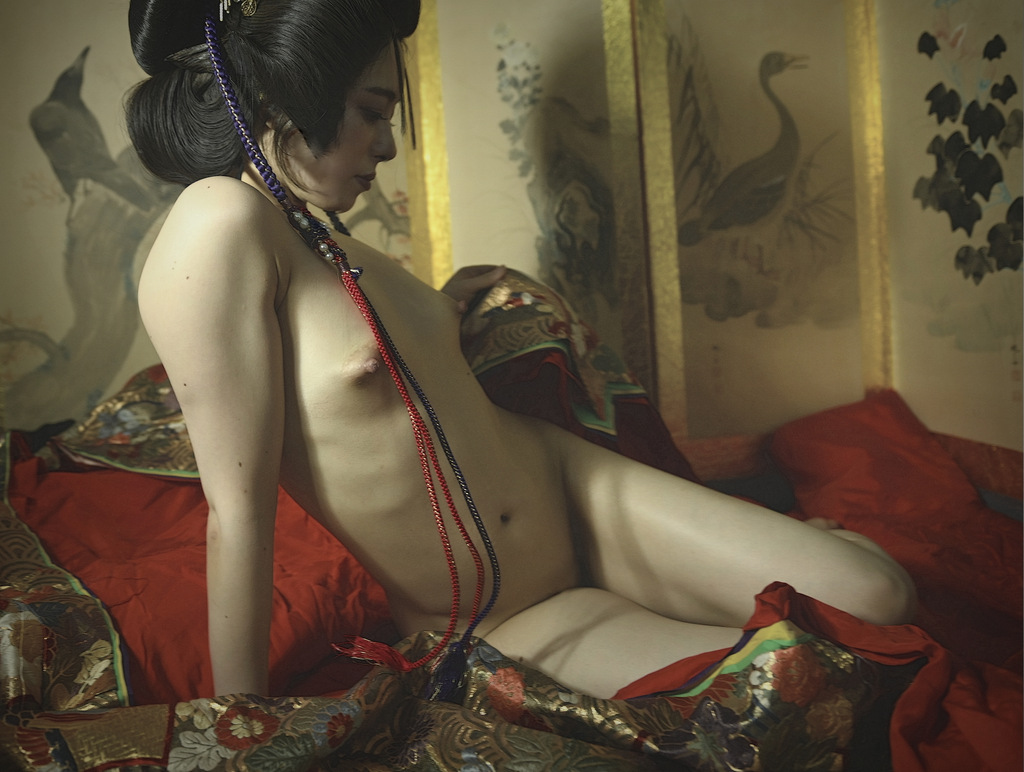
 【デジタル限定】山崎真実ラスト写真集 カメリアplus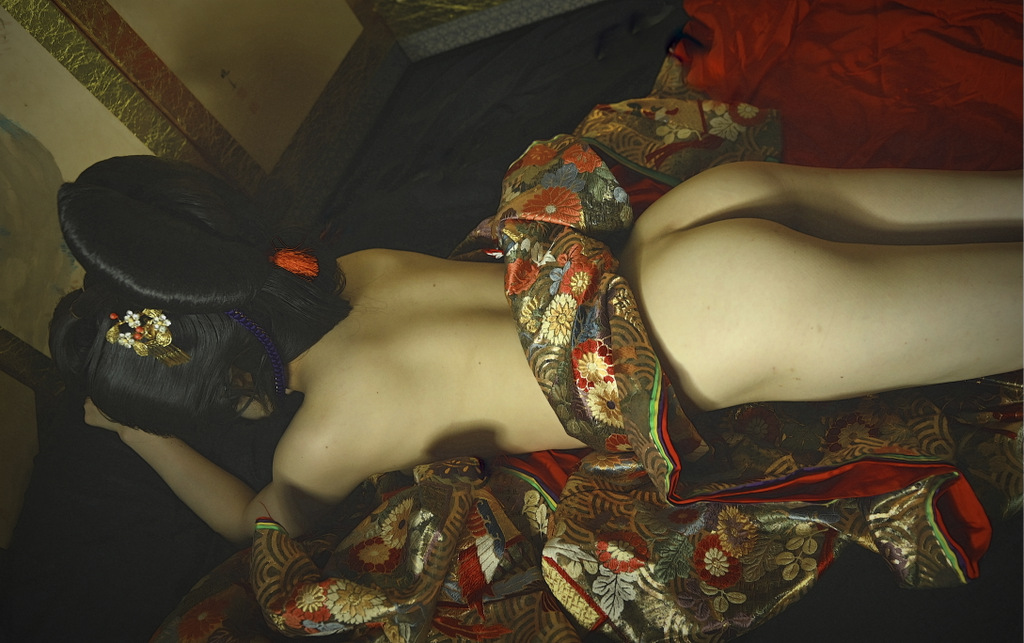


 【FANZA限定】向井藍写真集『愛して、藍。』 サイン入りプリントチェキ付き







 【特典映像付き!】BLUE MIRACLE BELL 八掛うみ【ヌード写真集】FANZA限定特別カット付き




 【オンラインイベント版】宮西ひかる写真集『Sunshine』(1冊購入特典付き!10月29日20:00開催)





 空想制服美少女 AI MODEL AV DEBUT 働くOL編
